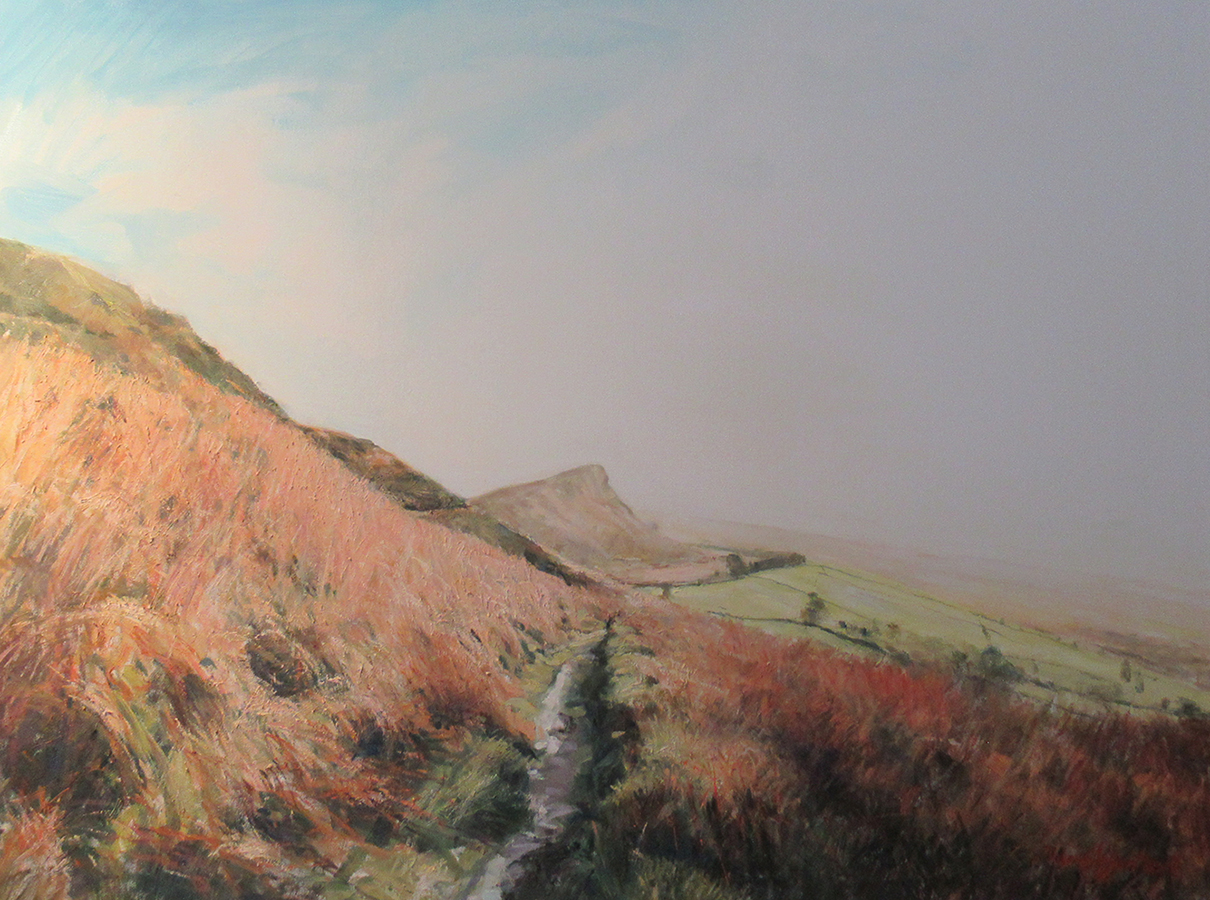
The current exhibition at The New Vic Theatre by Staffordshire artist David Hunt celebrates the landscapes and environments of the Staffordshire Moorlands. But what is it about this region which continues to inspire artists, writers and photographers?
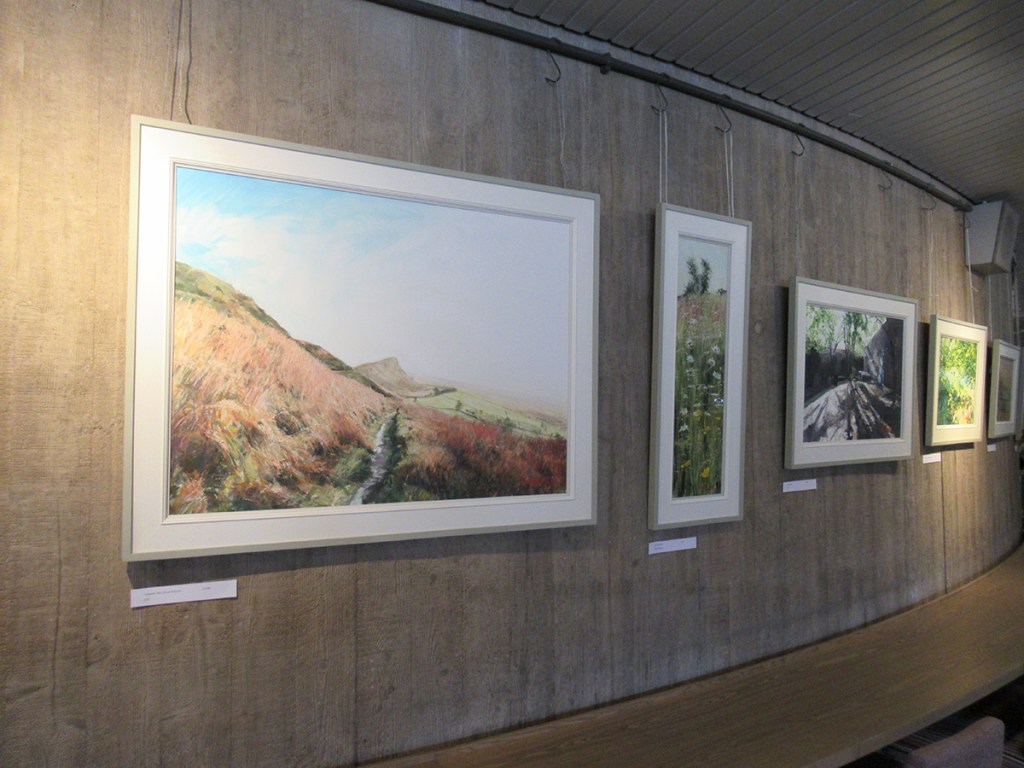
David Hunt is an artist who lives in the Staffordshire Moorlands and has been inspired by the area for decades. The exhibition space at The New Vic Theatre in Newcastle under Lyme hosts a collection of oil paintings, pastels and mixed media which takes the viewer on a journey up and around the hills and views of the county’s northern tip. Through different seasons, times of day and weather conditions you get a sense of the changing nature of the place against a back drop of gritstone forms and landmarks which have stood for thousands of years.
From Lud’s Church, to Ramshaw Rocks via The Roaches, Tittesworth Water, and Hen Cloud. This tour takes us through some of Staffordshire’s iconic and dramatic landscapes. All of which are created through expressive brush strokes and oil pastel to interpret the scenes so they appear as the living, breathing and transient places they are. For those who have walked the area you can recall the cold breeze against your cheeks or sense the relief of a clearing downpour as the clouds start to disperse in these works.
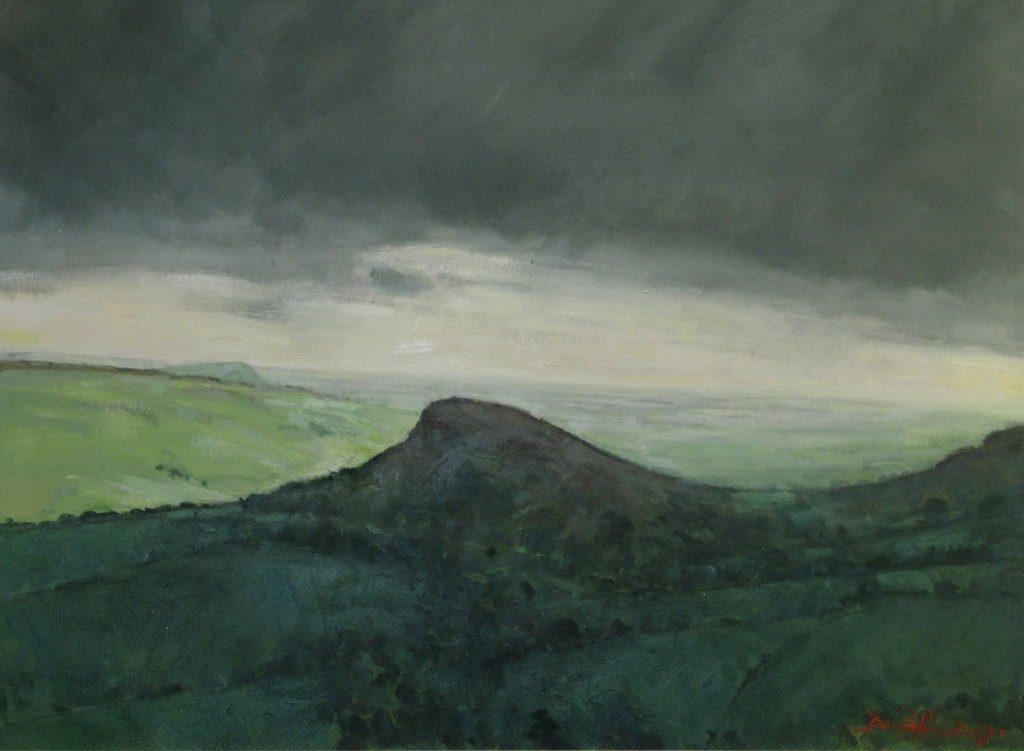
Why does the Staffordshire Moorlands continually inspire artists and writers?
The Staffordshire Moorlands mark the south western edge of the Peak District. Where farmland punctuated by small hamlets and market towns elevates to wilder moorlands, stone walls and rugged escarpments at the edge of Britain’s first National Park.
The highest part of Staffordshire, it offers a space and freedom from the urban and an escape from modern day life. Attracting people from all backgrounds to walk, climb, paint, draw and write. Standing upon the crags of the Roaches the view goes on forever across the Cheshire plain and into the horizon. On a clear day the Welsh mountains are visible in the distance.
In past centuries, anyone involved in illegal activities, from unlicensed boxing to trading with counterfeit money could evade arrest at Three Shire’s Head. A place where, as the name suggests, the borders of Staffordshire, Cheshire, and Derbyshire meet. Crossing the boundary meant an easy escape from local jurisdiction. This element of lawlessness gives a sense of historically being on the edge, both in terms of the landscape and the law.
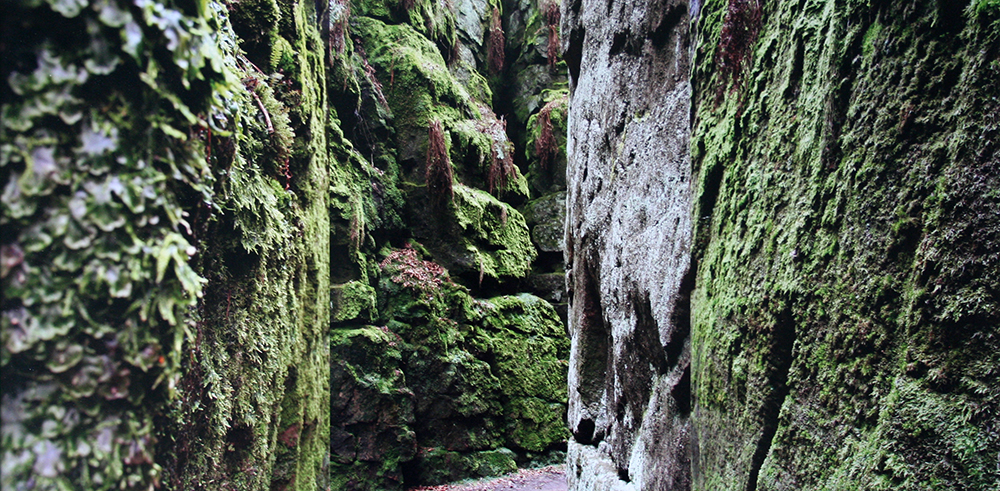
The atmosphere of legend is enhanced by feature’s such as Lud’s Church; not a church building as we may imagine, but a mysterious chasm, coated in green moss and lichens. Approximately 100 metres long and 15 metres deep. It was a secret place of worship for the Lollards in the 15th Century and also the location believed to be the lair of The Green Knight in the Arthurian legend.
Simon Armitage, the Poet Laureate, wrote a modern translation retelling the poem of Gawain and The Green Knight and illustrates the significance of weaving legend, place and landscape. The original unknown author of a single surviving manuscript dating back to around 1400 wrote with a dialect originating from the North Staffordshire/Cheshire region. It is considered to be “one of the earliest great stories of English literature, after Beowulf..” *
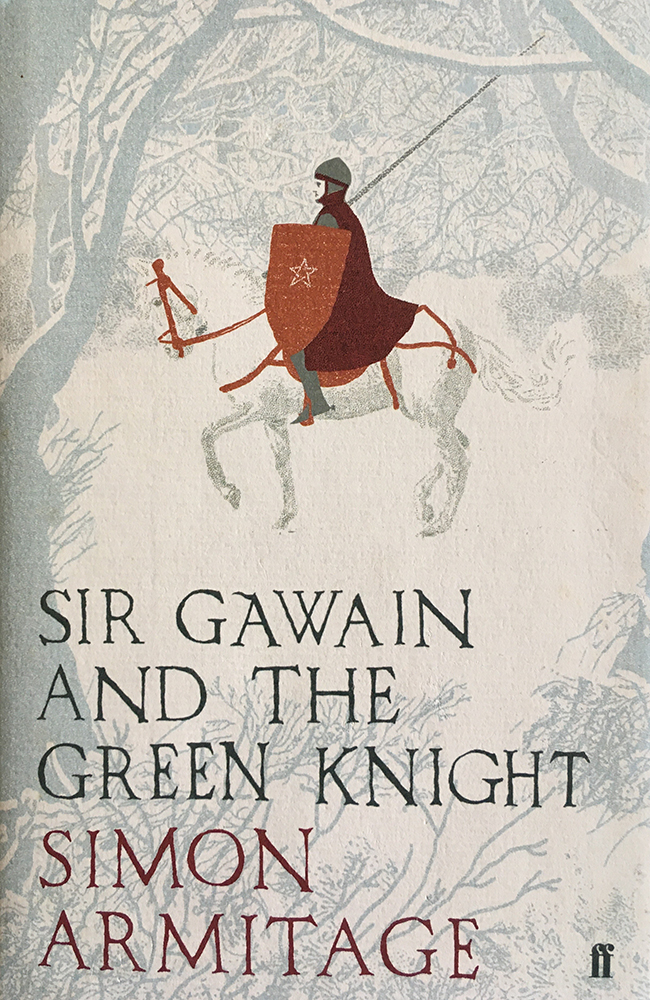
Cover Illustration: Bevis Martin
Cover Design: Darren Wall at Faber
It all adds up to create a sense of drama which inspired a photographic project, where I visited Lud’s Church on New Year’s Day to make images of the location on the very same day that Sir Gawain confronts his nemesis in the story. Descending into this cool, damp, subterranean environment it is easy to imagine how it could have been the source of inspiration to the original writer, nearly six hundred years ago.
The Staffordshire Moorlands is a place with many layers and textures. A part of the country which offers rich veins of creative influence, where history, myth, landscape and the changing light are interwoven. Whether you work through visual arts or with language and the written word. It has offered inspiration to generations of artists and will continue to do so for a long time into the future.
The exhibition of artwork by David Hunt is on show at The New Vic Theatre until 21st March 2020.
* “Sir Gawain and The Green Knight” by Simon Armitage is published by Faber and Faber.
 Jacob Broadhurst