Feeling Blue?

Blue has a rich history in art, culture, music and language. It’s a prominent colour in my latest paintings too. Something which started way before the lockdown but has become important during the adaptations and restrictions caused by Covid-19. The process is a response to a specific location, time of day, and of nurturing well being.

It’s been a while since my last blog but I’ve continued to make images. My ways of working have had to adapt a little since the coronavirus pandemic. Life for everyone has changed and with it comes the anxieties and lows which stem from the situation. Everyone can be forgiven for feeling a bit blue, especially now.

Being unable to travel extensively, some projects are on hold. Reflecting upon what influences me closer to home, I’ve been drawn to the colour blue for some time now. With an accumulation of photographs, sketches and observations, this colour has been a source of curiosity and inspiration.

Blue is packed with symbolism in art, culture, music and language.

From ancient Egyptian decoration to the paintings of the great masters. The pigment was originally made from semi precious “lapis lazuli” stones only found in remote mountain ranges in what we now know as Afghanistan. Its value many times that of gold, only those subjects deemed most worthy would be painted with it. Hence the Virgin Mary wearing blue in Renaissance painting.

Blue clothing was once only worn by royalty and the powerful as a sign of opulence and status. Then came the creation of indigo dye, followed by the invention of denim to democratise clothing; from practical workwear for the “blue collar” worker to everyday fashion.

Chinese porcelain is famous for its distinctive blue and white designs and being from Stoke-on-Trent I shouldn’t forget to give Josiah Wedgewood and his blue Jasperware a mention either!

In language and music the phrases using blue and the songs with it in the title are numerous. Think of the saying “once in a blue moon” or “Blue Moon” by Elvis Presley, “Blue Suede Shoes”, to New Order’s “Blue Monday” and the classic jazz album “Kind of Blue” by Miles Davis to name a few. It even sums up a whole genre of powerful, soulful and emotional music, “The Blues”.

Back in December 2019, Pantone revealed its Classic Blue as their colour of the year for 2020. Described as “Instilling calm, confidence, and connection, this enduring blue hue highlights our desire for a dependable and stable foundation on which to build as we cross the threshold into a new era.” They could not have predicted what was to come next…

Once you start digging and looking into this colour in all its symbolism and ambiguity, you start to realise how culturally embedded and significant it is around the world. Which leads me to my little creative corner of it.

Untitled Works in Blue 

The weather here in the UK has mostly been good with dry, bright sunny skies throughout April and into May. Meteorologists will point to the area of high pressure which has sat over the country. I wonder whether the lack of pollution from road traffic and fleets of planes being grounded has also contributed to this clarity? There is something wonderfully uplifting about an early morning blue sky. Equally, as the light fades on a sunny day, dusk has a calming effect.
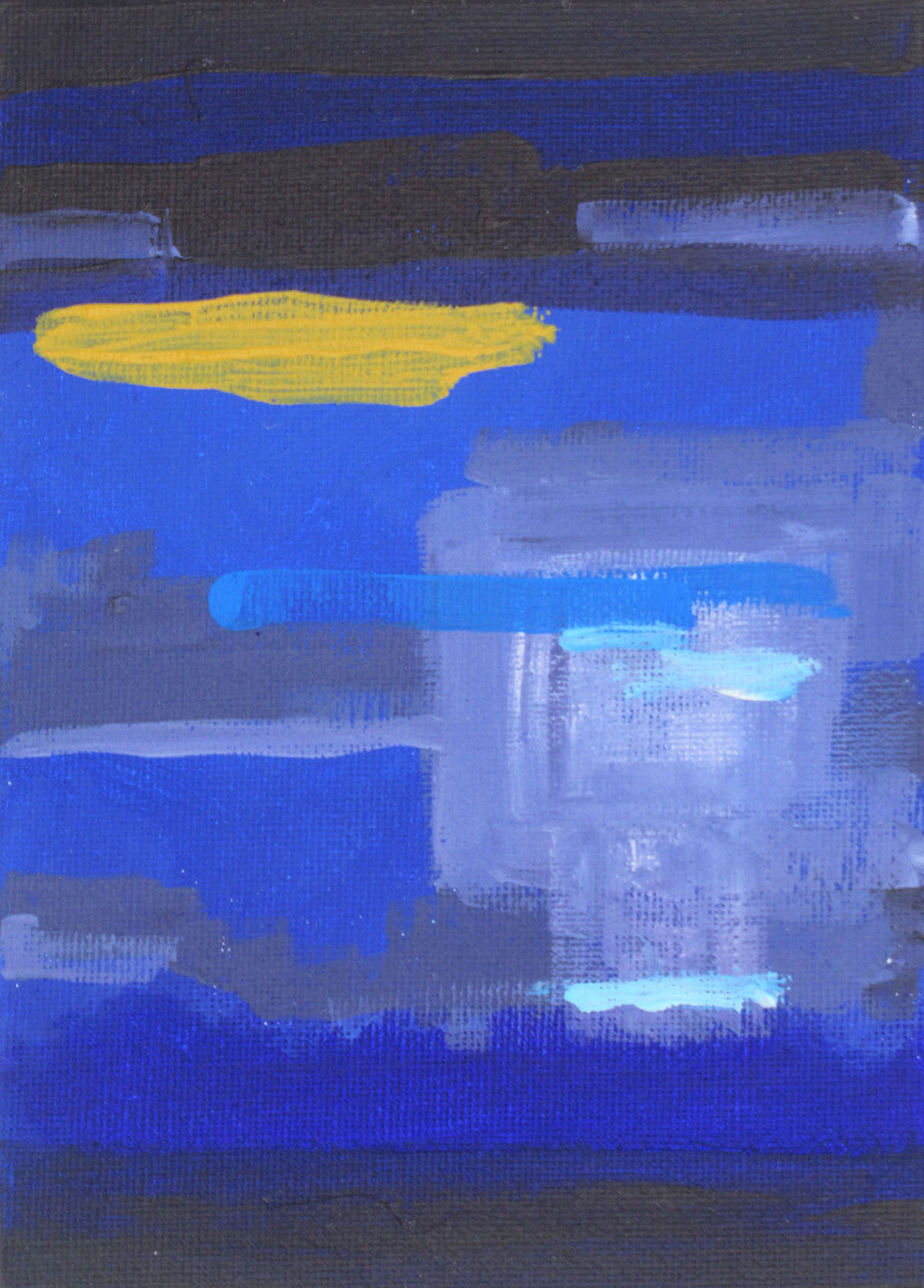
Untitled Study in Blue, acrylic paint on canvas board, 7x5inches, Jacob Broadhurst 2020

My latest work in progress is a series of paintings, or small studies in blue to be exact. Based around the Trent and Mersey and Caldon canals in Stoke on Trent. This is an area I have walked extensively with my dog, at all times of day, through all seasons and in all weathers. It is a special place to me because once you step onto the canal tow path you escape the busy main roads. The pace of life slows to a pedestrian speed. Mind and body start to relax and I start to feel present.
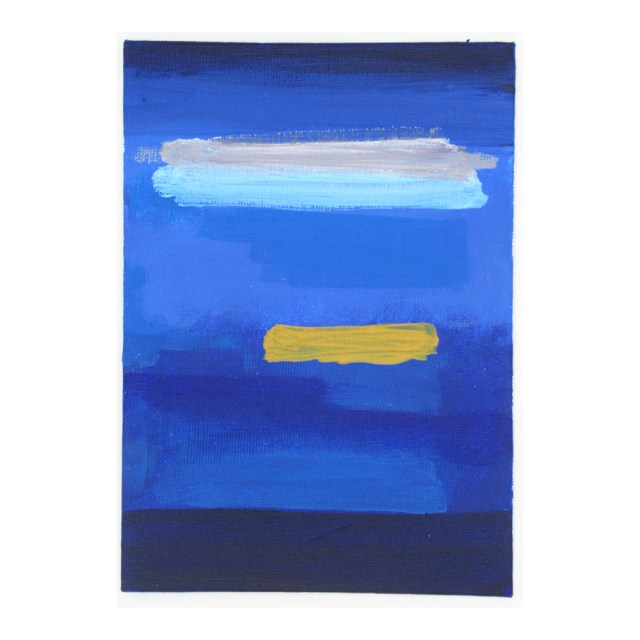
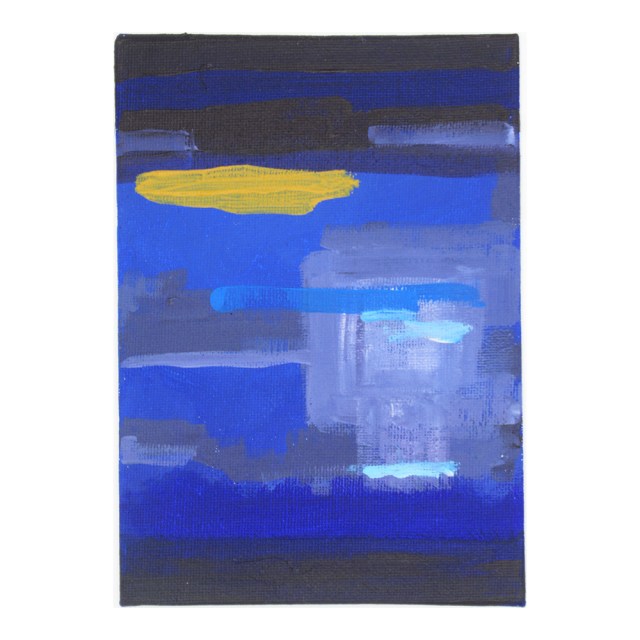
Untitled Study in Blue, acrylic paint on canvas board, 7x5inches, Jacob Broadhurst 2020

The moment in these works is when a sunny day is drawing to a close, or just beginning. A space on the cusp of day and night, yet not quite either. The reflections in the water and the transience of the place. A window which can last no more than half an hour. I have observed and absorbed this environment; smelled the cool air, listened to birdsong and geese honking. Becoming immersed in the sky and its distorted mirror image on the canal surface. It is a curious time where the creatures of the day are roosting and bedding down. While animals of the night are waking and emerging. Both world’s perfectly balanced for a brief period of time.
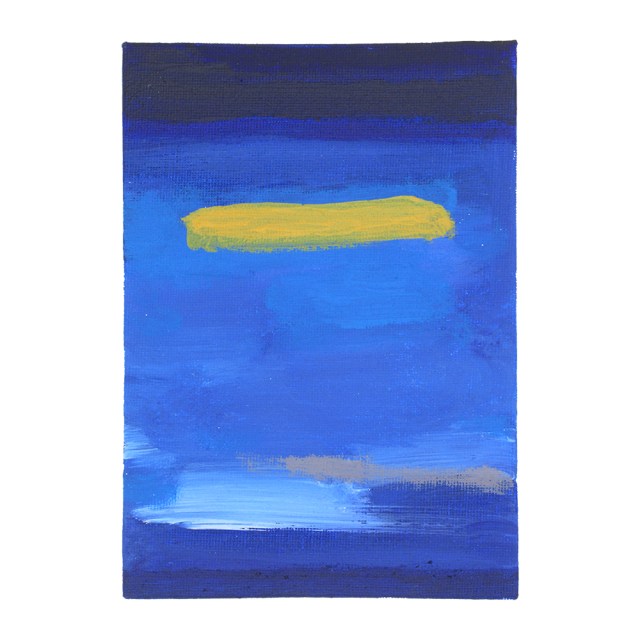
Untitled Study in Blue, acrylic paint on canvas board, 7x5inches, Jacob Broadhurst 2020

In taking all of this away, applying the paint is a reaction to the anxieties of a crisis, the news and a digital world. It is also about the fun and energising nature of creating something which is physically in front of you. Exploring its possibilities and imperfections. There is space for development; maybe the pieces will become bigger, more abstract, or perhaps they’ll tighten up. For now though, I am enjoying the intimacy of working at postcard size and in rediscovering materials which I haven’t used for far too long.

Whether anyone thinks it is good (or not) is not the point. More importantly, it is the product of pressing the pause button and feeling blue. Which for me is a mindful, calming and refreshing state.
Celebrating the Staffordshire Moorlands

The current exhibition at The New Vic Theatre by Staffordshire artist David Hunt celebrates the landscapes and environments of the Staffordshire Moorlands. But what is it about this region which continues to inspire artists, writers and photographers?

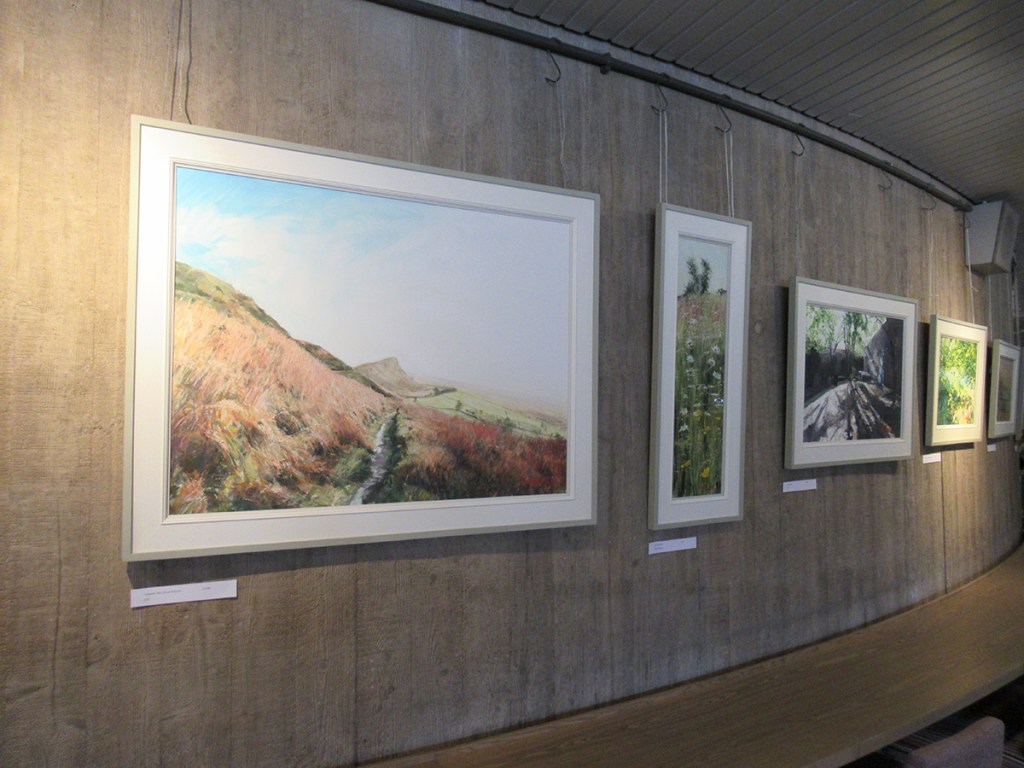
David Hunt Exhibition at The New Vic Theatre, Newcastle-under-Lyme

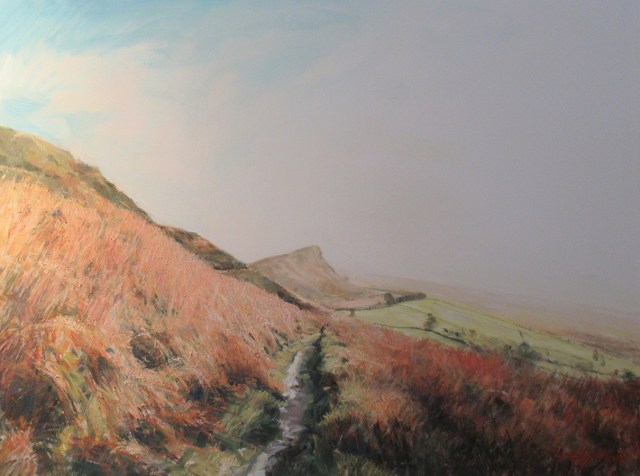
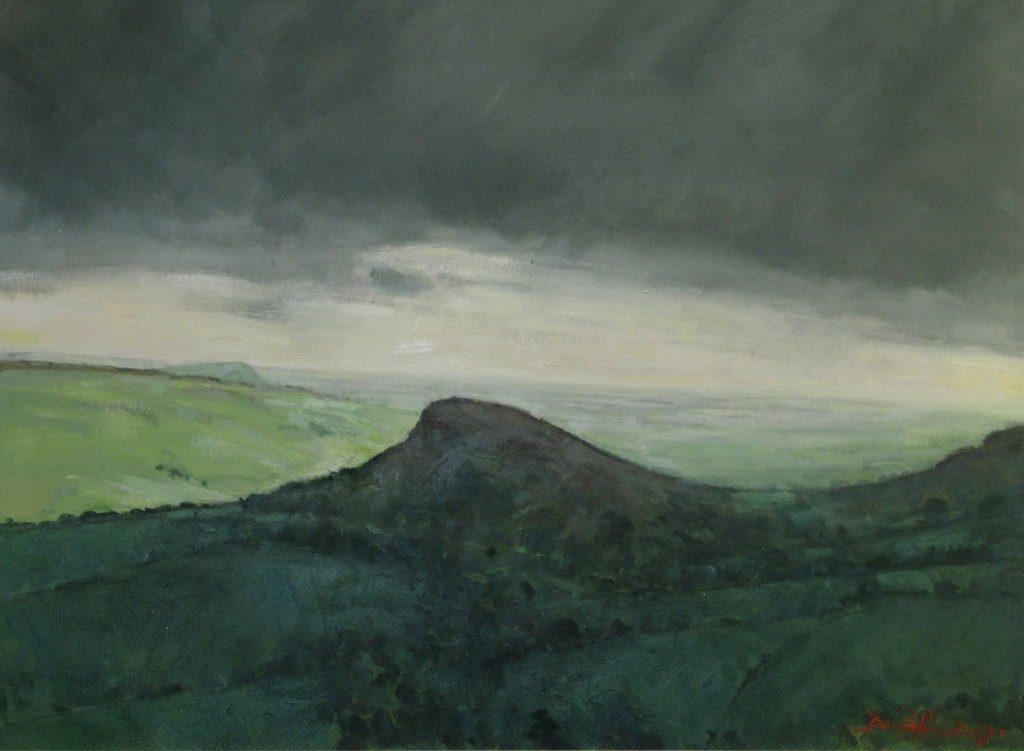
David Hunt is an artist who lives in the Staffordshire Moorlands and has been inspired by the area for decades. The exhibition space at The New Vic Theatre in Newcastle under Lyme hosts a collection of oil paintings, pastels and mixed media which takes the viewer on a journey up and around the hills and views of the county’s northern tip. Through different seasons, times of day and weather conditions you get a sense of the changing nature of the place against a back drop of gritstone forms and landmarks which have stood for thousands of years.

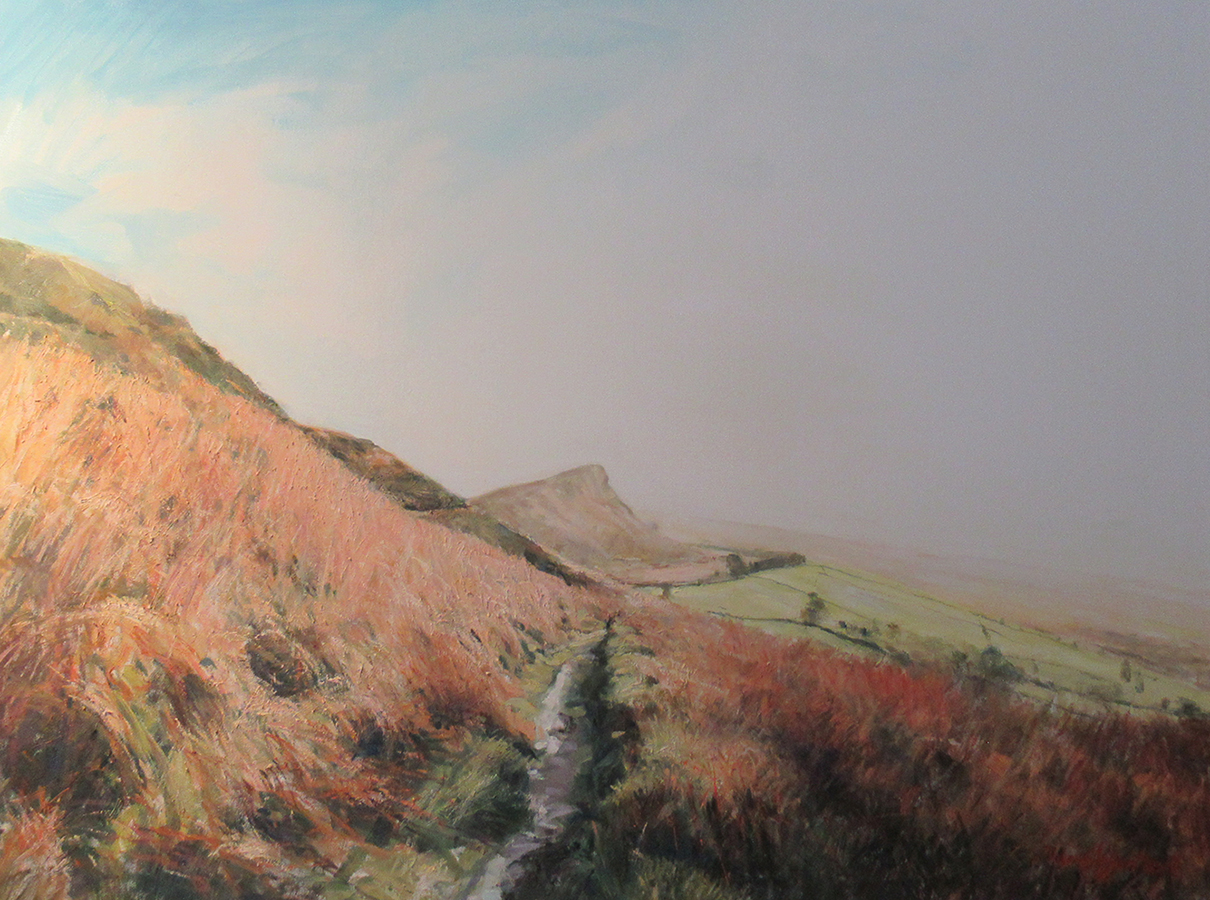
"Towards Hen Cloud, Autumn" by David Hunt
“Towards Hen Cloud, Autumn” by David Hunt

From Lud’s Church, to Ramshaw Rocks via The Roaches, Tittesworth Water, and Hen Cloud. This tour takes us through some of Staffordshire’s iconic and dramatic landscapes. All of which are created through expressive brush strokes and oil pastel to interpret the scenes so they appear as the living, breathing and transient places they are. For those who have walked the area you can recall the cold breeze against your cheeks or sense the relief of a clearing downpour as the clouds start to disperse in these works.

"Rainstorm Clearing Through the Cheshire Gap" (Mixed Media) by David Hunt
“Rainstorm Clearing Through the Cheshire Gap” (Mixed Media) by David Hunt

Why does the Staffordshire Moorlands continually inspire artists and writers?

The Staffordshire Moorlands mark the south western edge of the Peak District. Where farmland punctuated by small hamlets and market towns elevates to wilder moorlands, stone walls and rugged escarpments at the edge of Britain’s first National Park.

The highest part of Staffordshire, it offers a space and freedom from the urban and an escape from modern day life. Attracting people from all backgrounds to walk, climb, paint, draw and write. Standing upon the crags of the Roaches the view goes on forever across the Cheshire plain and into the horizon. On a clear day the Welsh mountains are visible in the distance.

In past centuries, anyone involved in illegal activities, from unlicensed boxing to trading with counterfeit money could evade arrest at Three Shire’s Head. A place where, as the name suggests, the borders of Staffordshire, Cheshire, and Derbyshire meet. Crossing the boundary meant an easy escape from local jurisdiction. This element of lawlessness gives a sense of historically being on the edge, both in terms of the landscape and the law.

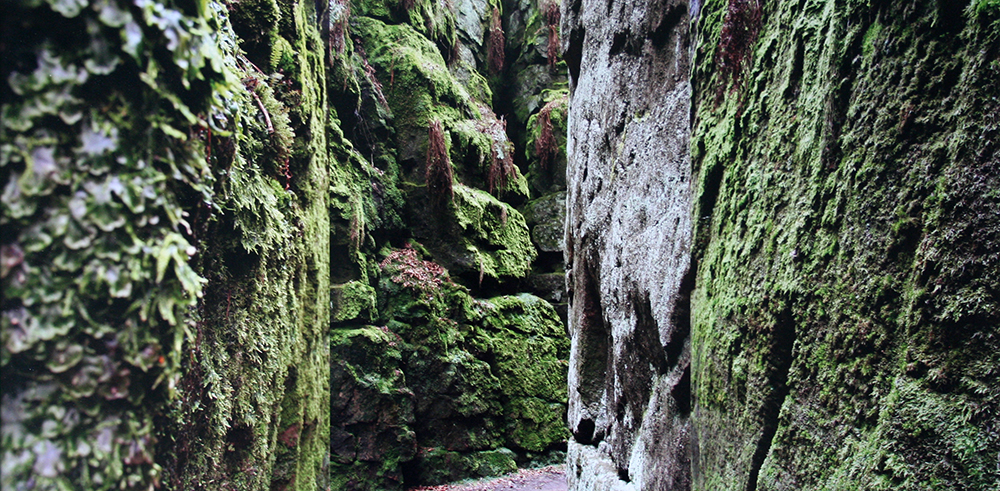
The atmosphere of legend is enhanced by feature’s such as Lud’s Church; not a church building as we may imagine, but a mysterious chasm, coated in green moss and lichens. Approximately 100 metres long and 15 metres deep. It was a secret place of worship for the Lollards in the 15th Century and also the location believed to be the lair of The Green Knight in the Arthurian legend.

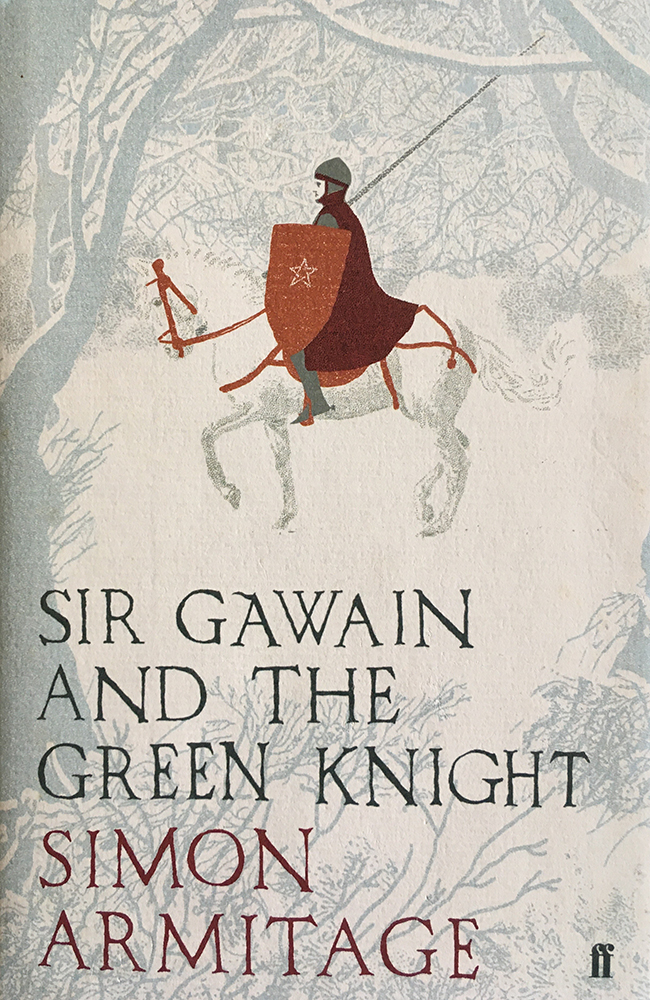
Simon Armitage, the Poet Laureate, wrote a modern translation retelling the poem of Gawain and The Green Knight and illustrates the significance of weaving legend, place and landscape. The original unknown author of a single surviving manuscript dating back to around 1400 wrote with a dialect originating from the North Staffordshire/Cheshire region. It is considered to be “one of the earliest great stories of English literature, after Beowulf..” *

Sir Gawain and The Green Knight by Simon Armitage, published by Faber and Faber
Sir Gawain and The Green Knight by Simon Armitage
Cover Illustration: Bevis Martin
Cover Design: Darren Wall at Faber

It all adds up to create a sense of drama which inspired a photographic project, where I visited Lud’s Church on New Year’s Day to make images of the location on the very same day that Sir Gawain confronts his nemesis in the story. Descending into this cool, damp, subterranean environment it is easy to imagine how it could have been the source of inspiration to the original writer, nearly six hundred years ago.

Lud's Church ©Jacob Broadhurst
Lud’s Church ©Jacob Broadhurst

The Staffordshire Moorlands is a place with many layers and textures. A part of the country which offers rich veins of creative influence, where history, myth, landscape and the changing light are interwoven. Whether you work through visual arts or with language and the written word. It has offered inspiration to generations of artists and will continue to do so for a long time into the future.

The exhibition of artwork by David Hunt is on show at The New Vic Theatre until 21st March 2020.

* “Sir Gawain and The Green Knight” by Simon Armitage is published by Faber and Faber.

The Brooks Press of Wirksworth

An unexpected collection of books made by his great grandfather’s printing press inspired a decade long project by artist Chris Brooks. Resulting in a quest to discover more about his heritage and explore the notion of “home” and “place”. I caught up with the photographer in Wirksworth, Derbyshire, to find out more.

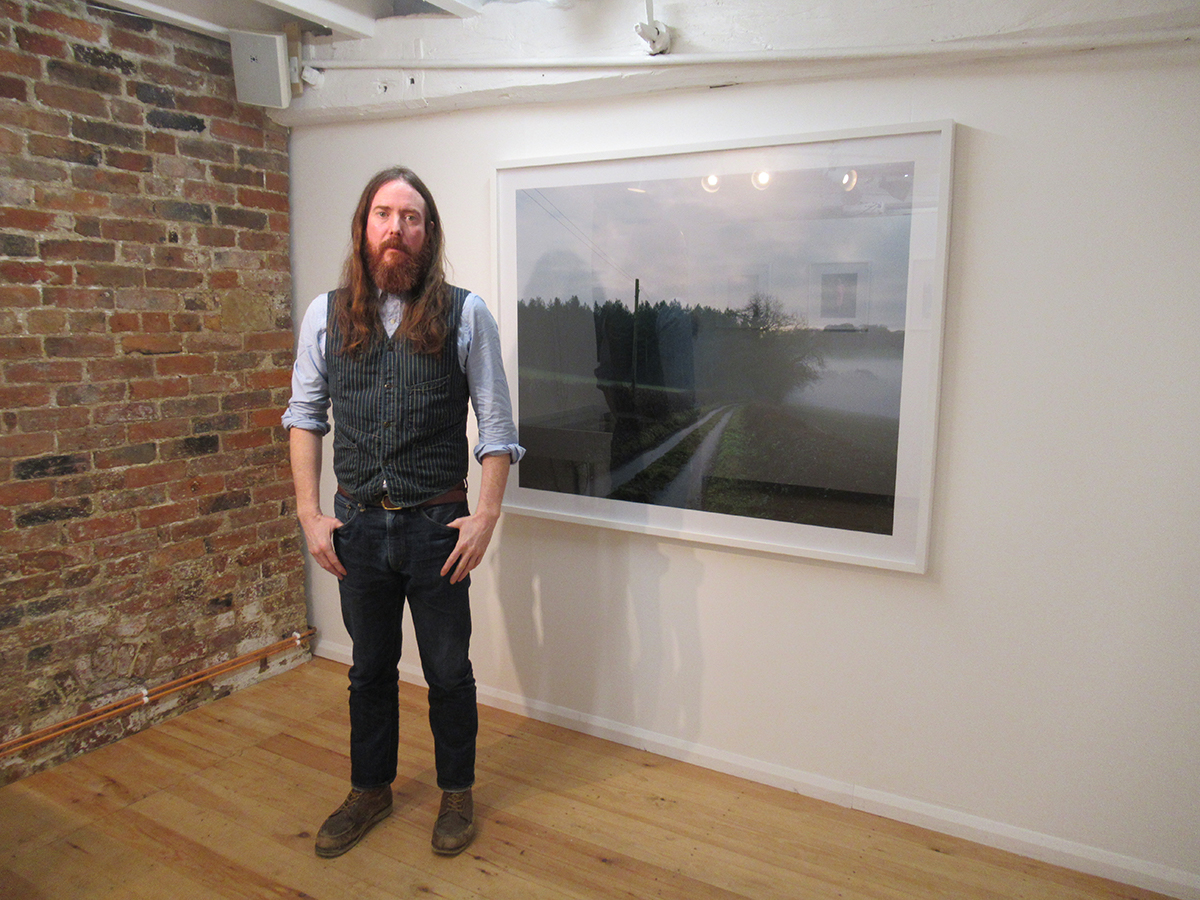
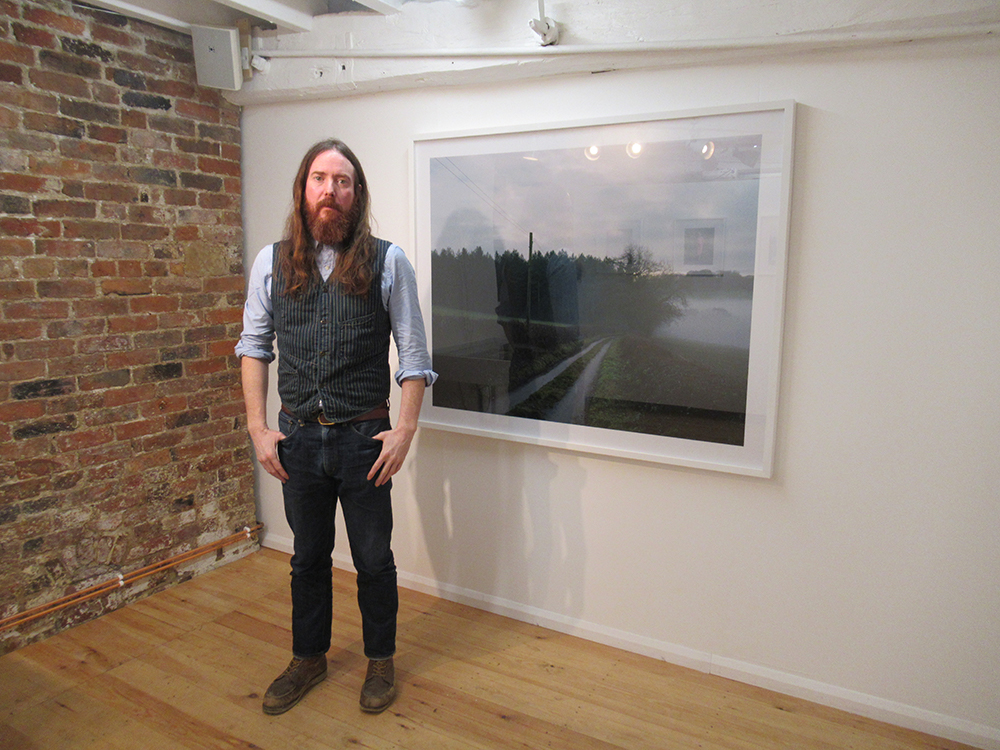
Chris Brooks at Haarlem Artspace, Wirksworth

Chris Brooks was presented with several books for his 30th Birthday. All printed and made by the press founded by his great grandfather in 1898. Consisting of two early 20th Century self help books; ”The Reality of Self”, “Ideas and Ideals” and a publication entitled “Wirksworth and Five Miles Round” by RR Hackett. They sparked a desire to find out more about this aspect of his past, which he knew virtually nothing about, and became the catalyst for a ten year journey exploring his connection to the area. 

The result is a beautifully made book of his own, created by combining photographs and printed ephemera from The Brooks Press found en route. No small feat as the company ceased trading in the early 1970’s before he was born. This is not strictly a documentary of the process, or a book version of the TV programme “Who Do You Think You Are?”, but something more nuanced and ambiguous. A volume which asks questions and offers a unique perspective of someone simultaneously connected and distanced from the subject. How is this possible?

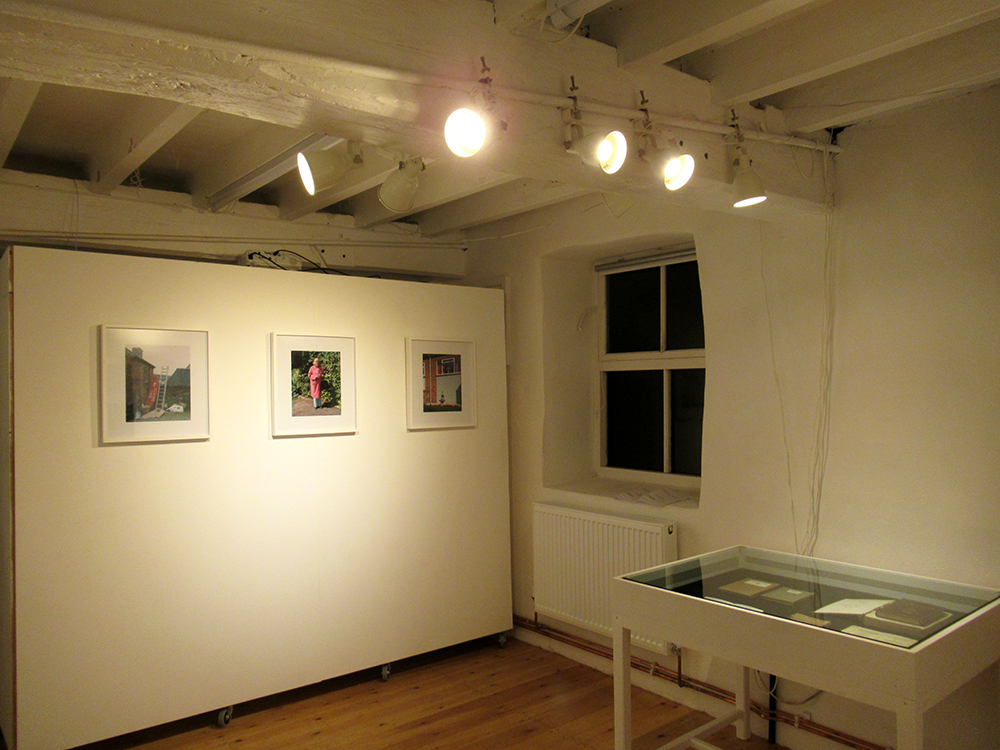
On this late January evening we are sitting in an intimate gallery space in the old Haarlem Mill, in Wirksworth. Brooks is presenting his artist talk about how this personal project came into being and the many challenges, twists and turns it took before finally being compiled into printed and bound pages. The exhibition also consists of large format photographs hanging on the walls and a display case of books, pamphlets and messages created by the original Brooks Press.

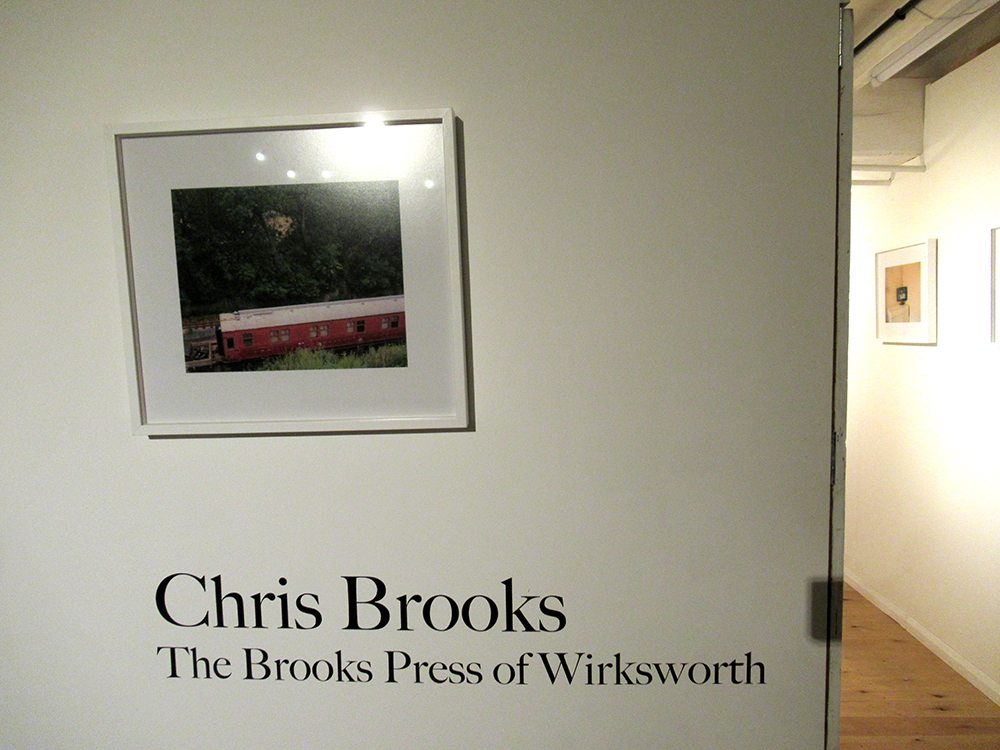
The Brooks Press of Wirksworth at Haarlem Artspace

The deeply personal side of the project is tied up in a tangle of complicated family relations and the sudden death of his father when he was a teenager. Photography was the means of escape and prompted several moves away to study and employment. This distance through time and geography has given the perspective of an outsider, while several generations associated with printing and publishing in Derbyshire has ignited curiosity and highlighted closer ties.

That said, it doesn’t mean that this has been plain sailing. It was the start of an emotional journey of self discovery for the artist, the question being asked in all of this is where is home? 

Nearly half a century since it ceased operating, there wasn’t much evidence of The Books Press in Wirksworth itself. Once the internet of its day and the hub of communications for miles around. It took a series of adverts and articles in today’s local press for evidence to emerge. The trail even leading to materials and artefacts stored in The British Library.

Following many visits for photography and investigation, numerous edits and mock ups, the final edition takes time to digest and understand. A very deliberate intention by the artist. When viewed by an American friend, Brooks was asked, “Does Wirksworth really exist or is it something you made up?” Its surreal combination of landscape and the oddities found in many aspects of rural community life with the historic fragments replicating the process of making the work. The photographs act as a metaphor for something universal beneath the surface of “Englishness” making Wirksworth representative of a bigger thing, about finding home. 

Two Contrasting Photographic Worlds

I first met Chris while studying photography at Northumbria University in Newcastle-upon-Tyne. Following graduation in 2000, our year group dispersed to follow many different photographic paths, some changing career completely. He has since moved to London, forging a very successful career in fashion photography where he regularly contributes to Esquire, Wallpaper and many other well known publications. 

Chris relocated to Amsterdam in 2019, The Brooks Press has served as an interesting point of reference when commercial work takes you between New York, London and Europe. The whole process and method of this personal project is the antithesis of fast paced digital commercial projects; shooting onto 10×8 film using a field camera. Looking from the outside it seems this method, timescale and exploration satisfy a creative need for the artist.

“If I’m putting batteries in the camera, then it is commercial. If it’s mechanical, then the work is personal”, he explains.

The Brooks Press in the 21st Century

“The Brooks Press of Wirksworth” has been described as an odyssey, which it is. Having known Chris half a lifetime ago, the creation of the book has given me the opportunity to catch up at various points since its launch at The Photographer’s Gallery in London in 2019. Appearing later the same year as part of the vibrant Wirksworth Arts Festival. It seemed entirely appropriate for the work to come full circle by being exhibited at Haarlem Art Space in the town during February 2020. It has created a new type of connection and perhaps even a constant too.

The Brooks Press of Wirksworth by Chris Brooks

I see this as a significant chapter in Chris Brooks life and creative career, but this is also just the start. There are plans to continue publishing future projects through The Brooks Press, reviving and reinventing it for the 21st century as a means of bringing new works through small, bespoke runs of artist books.

Following the talk and exhibition we sit and chat about photography, enjoyably reminiscing about our time at university, life in The Netherlands, and also future artwork and plans over a few beers in a local pub. Having found out more about the context for this project, it has left me asking, how well do I know my heritage? A mark of the quality of any artwork is whether it provokes thought and discussion. And The Brooks Press of Wirksworth certainly does that. What is my sense of home and place? I suspect my own odyssey has just begun…

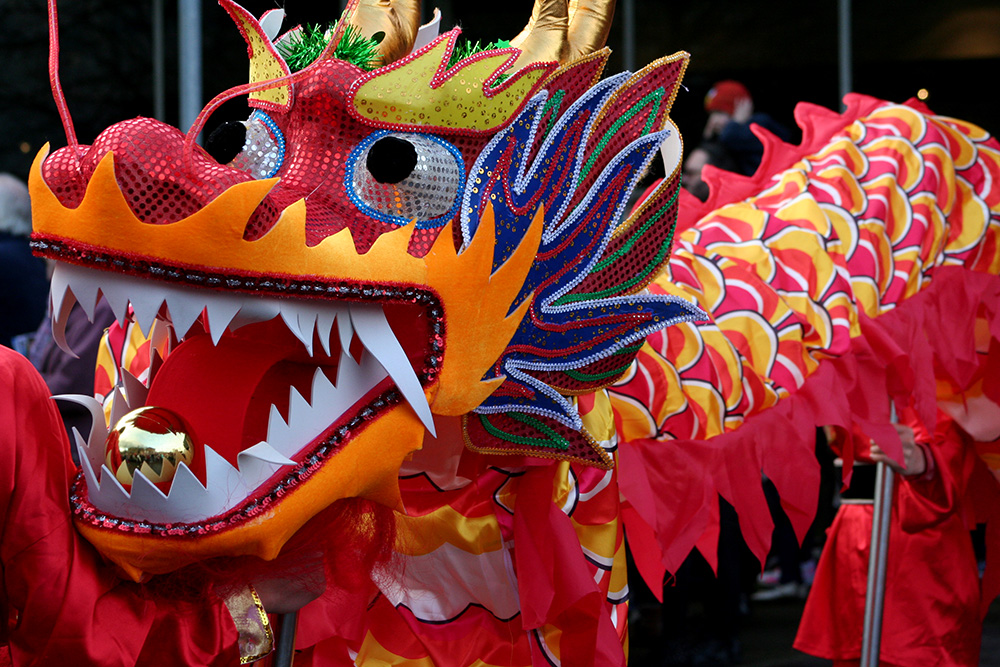
Chinese New Year: The Year of the Rat

The annual Chinese New Year celebrations at The Potteries Museum and Art Gallery always start with a bang! The loud crackle of firecrackers ending any chances of a quiet Sunday lie in if you live within a mile of the venue.

This is a hugely popular event, it’s free and draws crowds of young families from across the area. I first became aware of it during Stoke-on-Trent’s bid to become City of Culture. Attending the previous years of the Rooster and the Pig gave me a fairly good idea of the best places to stand outside for my photographs and the type of images I was looking for. Upon arrival it became quickly obvious that the Year of the Rat was going to be different. Mother nature had other ideas and the heavens opened, the persistent rain forcing all the dances to take place in the museum foyer.

An occasion like this is vibrant and noisy, a spectacular event in the city’s calendar. Offering a taste of another culture and traditions, while bringing the museum to life. Introducing a new generation to a treasure trove of art, history and culture on their doorstep. 

Dragon dancers, lion and unicorn dances, drumming and kung fu demonstrations alongside theatre and circus workshops all contribute to a real life experience in a world where so much is witnessed only via a small screen.

There is plenty of subject matter to photograph, if I could only move to see it properly. The museum is bursting at the seams with visitors. Small children are hoisted onto their Dad’s shoulders to get a better view. Unfortunately, this isn’t an option for me, and I’m starting to wonder if I’ll be able to produce any images from the day when this scene presented itself.

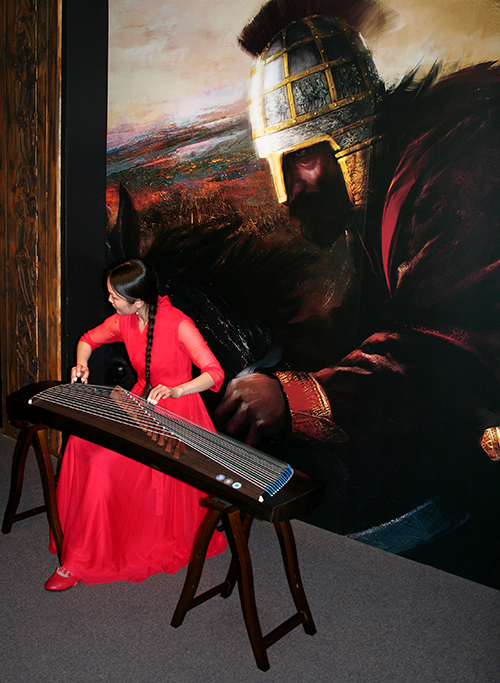
Chinese New Year Guzheng Music at The Potteries Museum and Art Gallery © Jacob Broadhurst

A Twist in the Year of the Rat’s Tale

Away from the bright costume and dynamism of the other performances, a young lady elegantly wearing a long red dress was playing beautiful, serene Guzheng music on a zither; a type of Chinese harp. Fully immersed in the melodies and the moment, this was an oasis of calm in the middle of the bustle. It was a pleasure to sit and listen. She explained afterwards that she found playing the instrument very therapeutic.

While you can’t really convey this in a photograph, she had been positioned near to the entrance of a gallery with an exhibition about the Anglo-Saxon Kingdom of Mercia, containing artefacts from the Staffordshire Hoard. Behind her was a giant mural of an Anglo-Saxon Warrior King galloping on horseback. It was the contrast in these two cultural elements combining with humorous coincidence which caught my eye. Demonstrating that you can never be sure how the day will go and that the unexpected is usually the most interesting. 

However, I am hoping that 2021’s Year of the Ox celebrations will be less soggy!

Penkhull Wassail

“Wassail!” went the cry and flaming torches and cups of cider were held aloft. 

Earlier in the afternoon, just before dusk, a large crowd of all ages gathered outside Penkhull Village Hall. Torches were lit, and the Penkhull Brass band, Penkhull Mystery Singers and the Domesday Morris dancers had emerged to much anticipation.

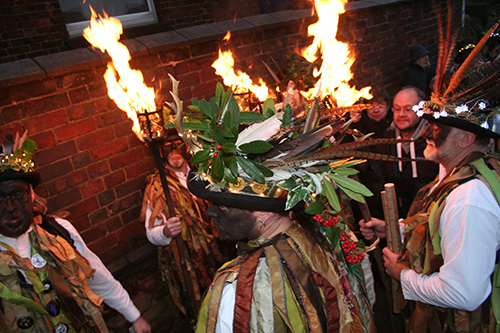
Domesday Morris at Penkhull Wassail 2019 © Jacob Broadhurst

Wassailing is a tradition and ceremony involving the blessing of orchards to ensure a good harvest and health for the forthcoming year. Another version sees revellers go from house to house singing and spreading seasonal cheer in exchange for food and drink; believed to be the origins of carol singing at Christmas. Penkhull Wassail combine the two by performing at a local apple tree before touring the pubs in the area.

For a community recognised in the Domesday Book commissioned by William the Conqueror in the 11th Century, you would be forgiven for thinking  that this has been a regular occurrence for centuries. 2020 marks only the 6th Penkhull Wassail and the second which I have attended and photographed. Judging by the numbers and enthusiasm shown by the participants and onlookers, it has become firmly established in the social calendar.

Following the bright lights and festivities of Christmas and the New Year, January can be a long dark month. An event bringing people together to celebrate the forthcoming Spring season, mixing music and dancing, and a parade which takes in all the local pubs before returning to the village hall for hot food, more cider and merriment, is very welcome.

Carefully marshalled by volunteers in high visibility vests everyone makes their way along Trent Valley Road. The procession shuffles into a large walled back garden where sits our apple tree. Hot mulled cider is handed around, its scent mingles with torch smoke in the cold night air. 

“The Squire” leads the ceremony, delivering speeches and the skeletal form of the tree is blessed. Cider is poured around its base and children hang pieces of toasted bread on the branches to “feed” it. I’m not sure how the tree feels about this but no doubt the local bird population will be grateful. All of this is punctuated by shouts of “Wassail!” and swigs of cider.

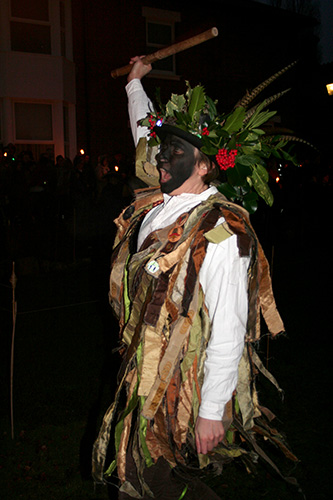
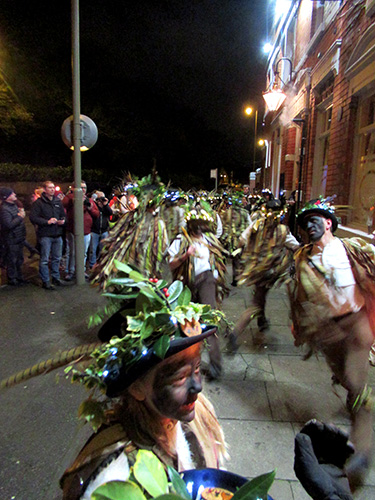
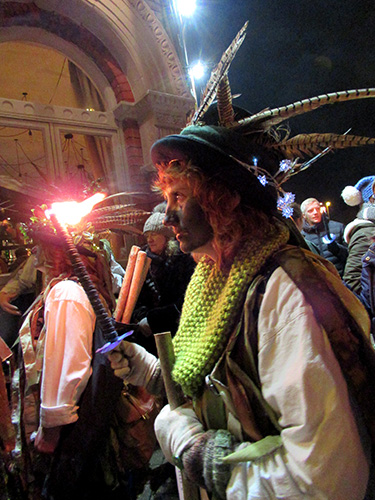
Domesday Morris start the first of many dances. Their rustic attire and painted faces give them a distinctly pagan appearance. No pristine whites, jingling bells and waving colourful handkerchiefs which Morris dancing brings to mind to the uninitiated. They have blackened faces, hold wooden staffs, and their green and brown hued clothing and costumes make them look as though they have emerged from a forest; something very appropriate given the occasion. Hats decorated with traditional pheasant plumes, greenery and garlands are mingled with battery powered fairy lights to bring the Anglo-Saxon origins into the 21st Century. It’s also good for keeping track of the dancers in the dark!

Penkhull Wassail 2019 © Jacob Broadhurst

Speaking of which, the dancing is full of energy and when the time in the choreography comes for dance partners to strike each others sticks it is done so with plenty of force and gusto, generating a loud “crack”! Whoops, cheers and even growls are enough to banish any evil spirits and wake the tree from its winter sleep.

It is a fascinating subject to photograph because of the sense of theatre and occasion combined with history, folklore and everyday life. I am having to be alert and move quickly to gain the best vantage points throughout the evening. Choosing smaller cameras and wider lenses means having to get as close as I can to the action without getting in the way.

Domesday Morris at Penkhull Wassail 2020 © Jacob Broadhurst

And so we move back into the centre of Penkhull where the procession makes its way to the Marquis of Granby pub. The music and dancing continues for the entertainment of drinkers who come outside to watch. Moving on to the second port of call at The Beehive Inn the party takes the opportunity to enjoy some refreshment before launching into music, singing, and dancing from different regions and counties. Something that is repeated outside each pub on a route which finishes at The Greyhound.

Penkhull Wassail 2020 © Jacob Broadhurst

It is well and truly dark now and the January night air is very cold, pressing against my cheeks. Wearing fingerless gloves is handy for operating a camera but by this point my fingertips and toes are starting to feel numb. Satisfied that I’ve captured this occasion, the revelry continues as I quietly peel away to walk home via a chip shop for takeaway fish and chips and a much needed hot mug of tea.

Welcome

Welcome to My Arts Blog

I have always had a curiosity for the arts and design in general. Even as a small child at primary school, I knew that this was my thing. Being passionate about visual arts and culture for as long as I can remember has led me to photograph, draw, paint, and write inspired by the world around me and the people I meet. 

So I decided that in 2020 and it was about time I shared more about my projects and those of others who I find fascinating. Inspiration can strike at any moment, sometimes instantaneously, while other ideas and concepts are more of a slow burn. Quietly developing over a long period of time until they emerge more fully formed. 

Want to know more? Find out more about me, while in these blog posts I look forward to sharing with you my adventures and musings in the arts, design and culture. I hope you enjoy the read – welcome aboard!